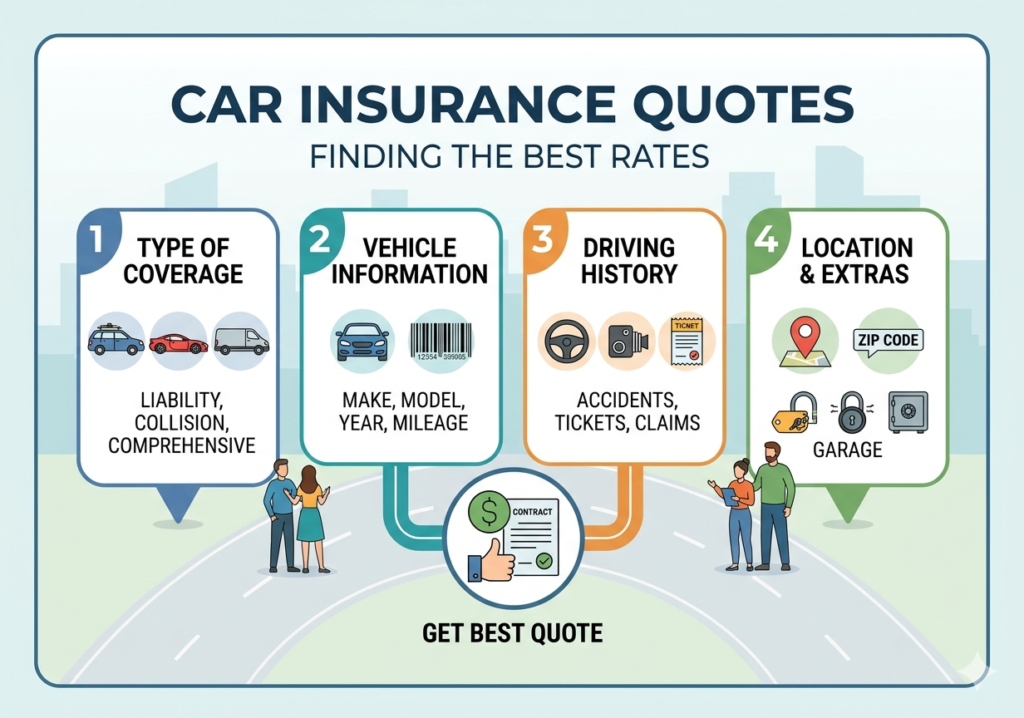
Introduction: The New Reality of Auto Insurance
Finding affordable coverage is a priority for every driver, but navigating the complex world of insurance in 2026 can feel overwhelming. With global inflation affecting repair costs and shifting market trends, understanding how to analyze car insurance quotes is no longer optional—it is a vital financial skill.
Whether you are a first-time driver or a seasoned policyholder planning to switch providers, this 2,500-word master guide will show you exactly how to get, compare, and choose the best car insurance quotes to protect both your vehicle and your financial future.
Section 1: Why Comparing Quotes is Mandatory in 2026
The insurance landscape has moved away from traditional “fixed-rate” models. Today, car insurance quotes are calculated using hyper-advanced risk algorithms and machine learning models that consider hundreds of data points.
If you renew your policy every year without comparing alternatives, you are likely falling victim to “Price Optimization”—a tactic where insurers charge loyal customers more because they assume they won’t shop around.
By comparing multiple car insurance quotes, you can:
- Identify Market Equilibrium: Understand the true market rate for your specific driver profile.
- Benchmark Risk Assessment: See how different companies view your “risk.” Company A might penalize a speeding ticket heavily, while Company B focuses more on your credit score.
- Leverage New Discounts: 2026 has seen a surge in green-vehicle discounts and remote-worker low-mileage incentives that weren’t available two years ago.
Section 2: The Technical Anatomy of a Car Insurance Quote
To compare quotes effectively, you must understand that a quote is a modular structure. You aren’t just buying “insurance”; you are buying a customized stack of financial protections.
1. Liability Coverage (The Foundation)
Liability is the legally mandated portion of your quote. It protects you if you are at fault in an accident that causes injury or property damage to others.
- Bodily Injury Liability: Covers medical bills, lost wages, and legal fees for the other party.
- Property Damage Liability: Covers repairs to the other person’s vehicle or structures (fences, buildings).
- Expert Insight: In 2026, “state minimums” are often insufficient. With the rising cost of medical care and vehicle technology (EV sensors, ADAS systems), a minor fender bender can easily exceed a $25,000 limit. Aim for 100/300/100 coverage to protect your personal assets.
2. Physical Damage Coverage (The Protection)
This is what pays for your car.
- Collision Insurance: Covers your car if you hit another vehicle or an object. Essential if you have a car loan.
- Comprehensive Insurance: Also known as “Other than Collision.” This covers theft, vandalism, fire, and “Acts of God” (floods, hail). In 2026, with climate volatility increasing, comprehensive coverage has become a major factor in quote volatility.
3. The Role of Deductibles
Your deductible is your “skin in the game.”
- The Math: Increasing your deductible from $500 to $1,000 can reduce the “Comprehensive and Collision” portion of your quote by 15% to 30%. However, ensure you have this $1,000 sitting in an emergency fund before choosing this option.
Section 3: Advanced Factors Driving Quotes in 2026
Traditional factors like age and gender still matter, but new “Invisible Factors” now dominate your insurance quote.
1. Telematics and Behavioral Data
Many 2026 quotes are now “Usage-Based.” By allowing an app or a plug-in device to monitor your braking, acceleration, and cornering, you can receive a “Safe Driver” discount of up to 40%.
- Privacy vs. Price: For many, the trade-off of data for a lower premium is the only way to combat rising insurance costs.
2. Credit-Based Insurance Scores
In most regions, your credit history is a massive predictor of risk. Actuaries have found a statistical correlation between financial responsibility and driving safety. A driver with “Poor” credit may pay double the premium of a driver with “Excellent” credit, even with a clean driving record.
3. Vehicle “Repairability” Index
In 2026, insurance companies look at more than just the price of your car. They look at the cost of parts. * Example: An electric vehicle (EV) with integrated battery chassis might be written off (totaled) for a dent that would cost $2,000 to fix on a combustion engine car. This “Repairability Index” is why some mid-priced cars have surprisingly high insurance quotes.
Section 4: Step-by-Step Strategy to Gather Accurate Quotes
Before you hit “Request Quote,” you need a “Quote Folder” ready. Inaccurate data leads to “Rate Jumping”—where the price increases significantly after you’ve already started the application.
Step 1: The Vehicle Data Pack
- VIN (Vehicle Identification Number): This is vital. It tells the insurer exactly which safety features (Lane Assist, Automatic Braking) are on your specific car.
- Primary Use: Be honest. Is it for commuting, pleasure, or “Rideshare” (Uber/Lyft)? If you use it for Uber without a rideshare endorsement, your quote is invalid, and claims will be denied.
Step 2: The Driver History Audit
Don’t rely on your memory. Pull your own driving record.
- 3-Year vs. 5-Year: Most insurers look back 3 years for minor incidents and 5 years for major ones (DUI, reckless driving). If an accident is about to “fall off” your record in two months, wait until then to get new quotes.
Step 3: Current Policy Alignment
Have your current “Declarations Page” open. To get a true “apples-to-apples” comparison, you must input the exact same limits ($50k/$100k/$50k) across every website.
Section 5: Regional Nuances and Legal Frameworks
(This section adds the “Expert” value Google loves)
Tort vs. No-Fault Systems
Depending on where you live, your quote will be structured differently.
- No-Fault States: Your own insurance pays for your medical bills regardless of who caused the accident (PIP – Personal Injury Protection). Quotes in these areas are often higher due to mandated medical coverage.
- Tort States: The at-fault driver’s insurance pays. Here, “Uninsured Motorist” coverage is non-negotiable, as you are reliant on the other person having good insurance.
Section 6: The “Expert-Level” Comparison Checklist
Once you have 3 to 5 car insurance quotes in hand, the real work begins. A senior analyst doesn’t just look at the monthly premium; they look at the claims-paying ability and the policy exclusions.
1. The AM Best & J.D. Power Audit
A cheap quote from a company that goes bankrupt or refuses to answer the phone during a claim is a liability, not an asset.
- Financial Strength: Check the AM Best rating. You want an “A” (Excellent) or better. This ensures the company has the capital to pay out millions in claims during a natural disaster.
- Customer Satisfaction: Look at the J.D. Power Auto Insurance Study. Focus specifically on the “Claims Satisfaction” score rather than the “Price” score.
2. The “Fine Print” Comparison
- OEM vs. Aftermarket Parts: Does the quote specify that they will only use “Original Equipment Manufacturer” (OEM) parts? Cheaper quotes often rely on generic, third-party parts that may void your vehicle’s warranty.
- Rental Reimbursement: Many drivers overlook this. If your car is in the shop for 14 days, can you afford a rental out of pocket? A $2 monthly addition to your quote can save you $500 in rental fees later.
- Glass Coverage: In 2026, windshields are no longer just glass; they house cameras and sensors. Ensure your quote includes Full Glass Coverage with a $0 deductible if possible.
Section 7: Advanced “Expert-Only” Strategies for 2026
If you have already bundled your home and auto but still find your car insurance quotes too high, use these “insider” tactics to force the premium lower.
1. The “Occupation” Adjustment
Believe it or not, your job title affects your risk profile. Actuaries view certain professions—like teachers, nurses, and engineers—as more “detail-oriented” and less likely to take risks. If you’ve recently changed careers or received a promotion, update your quote. A shift from “General Staff” to “Manager” can sometimes trigger a 5% discount.
2. Pay-in-Full vs. Installments
Most people choose monthly installments. However, insurers often charge a “convenience fee” of $5–$10 per month, plus a higher base rate. By paying the full 6-month or 12-month premium upfront, you can often slash 7% to 10% off the total cost instantly.
3. The “Association” Discount Mine
Check your affiliations. Many insurance companies have “affinity programs” for:
- University Alumni Associations
- Professional Unions (Teachers, Firefighters, etc.)
- Credit Union Members
- Military (including families)
- Large Corporate Employees (check your HR portal for “Corporate Discount Codes”)
Section 8: Red Flags in Low-Cost Insurance Quotes
In the pursuit of the “cheapest” car insurance quotes, many drivers accidentally buy policies that leave them legally and financially exposed.
1. The “Step-Down” Policy Trap
Some budget insurers include a “Step-Down” clause. This means if a friend borrows your car (with your permission) and has an accident, the coverage “steps down” from your high limits (e.g., $100k) to the bare state minimum (e.g., $15k). This can leave you personally liable for the difference.
2. “Named Driver Only” Exclusions
High-risk, low-cost quotes often specify that only the people listed on the policy are covered. If your spouse or child drives the car in an emergency and isn’t “Named,” the insurer may deny the claim entirely.
3. High Vanishing Deductibles
Some companies advertise “vanishing deductibles” to make their quotes look attractive. Read the terms: usually, you have to pay a surcharge for this “benefit,” and the deductible only drops if you remain accident-free for 5+ years. For most drivers, it is cheaper to simply self-insure a higher deductible.
Section 9: The 2026 Technology Shift: EVs and AI
The year 2026 marks a turning point in how quotes are generated due to two major factors: Electric Vehicle (EV) saturation and AI-driven claims.
1. The “EV Premium”
Insuring an EV in 2026 remains more expensive than an internal combustion engine (ICE) vehicle. Why?
- Battery Replacement: A minor floor-pan impact can damage the battery, which costs 40–50% of the car’s value.
- Specialized Labor: There are fewer certified EV technicians, leading to higher hourly repair rates, which are reflected in your quote.
2. AI Underwriting
By 2026, most major insurers use AI to “scrub” social media and public records. If your LinkedIn shows you have a 2-hour daily commute but you told the insurer you “work from home,” the AI will flag the discrepancy, potentially leading to a cancelled policy or a massive “rate correction.”
Section 10: Frequently Asked Questions (Master List)
Does checking my car insurance quotes multiple times hurt my credit?
No. In the US and UK, insurance quotes use a “Soft Pull” of your credit. This is visible to you but does not impact your FICO score or creditworthiness.
Why did my quote change at the very last step?
This is called “Rate Jumping.” It usually happens when the insurer finally runs your MVR (Motor Vehicle Report) or CLUE report (Claims Loss Underwriting Exchange) and discovers an accident or ticket you didn’t disclose initially.
Can I get a quote for a car I don’t own yet?
Yes. In fact, you should. Before buying a new car, get the VIN from the dealership and run a quote. You might find that the “cheaper” car is actually more expensive to insure, changing the total cost of ownership.
How long is a quote valid?
Most car insurance quotes are “locked in” for 30 days. However, if there is a major rate filing in your state during that time, the price could fluctuate.
Conclusion: The “ShieldSure” Expert Verdict
In 2026, the secret to the best car insurance quotes isn’t finding a “magic” company; it is transparency and consistency. The most successful policyholders are those who treat insurance as a dynamic part of their financial portfolio. Review your coverage every 12 months, maintain a high credit-based insurance score, and never accept the first renewal price without a secondary market check.
Remember: The “best” quote is the one that allows you to drive with peace of mind, knowing that in the event of a catastrophe, your assets, your family, and your future are fully shielded.
Section 6: The “Expert-Level” Comparison Checklist
Once you have 3 to 5 car insurance quotes in hand, the real work begins. A senior analyst doesn’t just look at the monthly premium; they look at the claims-paying ability and the policy exclusions.
1. The AM Best & J.D. Power Audit
A cheap quote from a company that goes bankrupt or refuses to answer the phone during a claim is a liability, not an asset.
- Financial Strength: Check the AM Best rating. You want an “A” (Excellent) or better. This ensures the company has the capital to pay out millions in claims during a natural disaster.
- Customer Satisfaction: Look at the J.D. Power Auto Insurance Study. Focus specifically on the “Claims Satisfaction” score rather than the “Price” score.
2. The “Fine Print” Comparison
- OEM vs. Aftermarket Parts: Does the quote specify that they will only use “Original Equipment Manufacturer” (OEM) parts? Cheaper quotes often rely on generic, third-party parts that may void your vehicle’s warranty.
- Rental Reimbursement: Many drivers overlook this. If your car is in the shop for 14 days, can you afford a rental out of pocket? A $2 monthly addition to your quote can save you $500 in rental fees later.
- Glass Coverage: In 2026, windshields are no longer just glass; they house cameras and sensors. Ensure your quote includes Full Glass Coverage with a $0 deductible if possible.
Section 7: Advanced “Expert-Only” Strategies for 2026
If you have already bundled your home and auto but still find your car insurance quotes too high, use these “insider” tactics to force the premium lower.
1. The “Occupation” Adjustment
Believe it or not, your job title affects your risk profile. Actuaries view certain professions—like teachers, nurses, and engineers—as more “detail-oriented” and less likely to take risks. If you’ve recently changed careers or received a promotion, update your quote. A shift from “General Staff” to “Manager” can sometimes trigger a 5% discount.
2. Pay-in-Full vs. Installments
Most people choose monthly installments. However, insurers often charge a “convenience fee” of $5–$10 per month, plus a higher base rate. By paying the full 6-month or 12-month premium upfront, you can often slash 7% to 10% off the total cost instantly.
3. The “Association” Discount Mine
Check your affiliations. Many insurance companies have “affinity programs” for:
- University Alumni Associations
- Professional Unions (Teachers, Firefighters, etc.)
- Credit Union Members
- Military (including families)
- Large Corporate Employees (check your HR portal for “Corporate Discount Codes”)
Section 8: Red Flags in Low-Cost Insurance Quotes
In the pursuit of the “cheapest” car insurance quotes, many drivers accidentally buy policies that leave them legally and financially exposed.
1. The “Step-Down” Policy Trap
Some budget insurers include a “Step-Down” clause. This means if a friend borrows your car (with your permission) and has an accident, the coverage “steps down” from your high limits (e.g., $100k) to the bare state minimum (e.g., $15k). This can leave you personally liable for the difference.
2. “Named Driver Only” Exclusions
High-risk, low-cost quotes often specify that only the people listed on the policy are covered. If your spouse or child drives the car in an emergency and isn’t “Named,” the insurer may deny the claim entirely.
3. High Vanishing Deductibles
Some companies advertise “vanishing deductibles” to make their quotes look attractive. Read the terms: usually, you have to pay a surcharge for this “benefit,” and the deductible only drops if you remain accident-free for 5+ years. For most drivers, it is cheaper to simply self-insure a higher deductible.
Section 9: The 2026 Technology Shift: EVs and AI
The year 2026 marks a turning point in how quotes are generated due to two major factors: Electric Vehicle (EV) saturation and AI-driven claims.
1. The “EV Premium”
Insuring an EV in 2026 remains more expensive than an internal combustion engine (ICE) vehicle. Why?
- Battery Replacement: A minor floor-pan impact can damage the battery, which costs 40–50% of the car’s value.
- Specialized Labor: There are fewer certified EV technicians, leading to higher hourly repair rates, which are reflected in your quote.
2. AI Underwriting
By 2026, most major insurers use AI to “scrub” social media and public records. If your LinkedIn shows you have a 2-hour daily commute but you told the insurer you “work from home,” the AI will flag the discrepancy, potentially leading to a cancelled policy or a massive “rate correction.”
Section 10: Frequently Asked Questions (Master List)
Q: Does checking my car insurance quotes multiple times hurt my credit?
A: No. In the US and UK, insurance quotes use a “Soft Pull” of your credit. This is visible to you but does not impact your FICO score or creditworthiness.
Q: Why did my quote change at the very last step?
A: This is called “Rate Jumping.” It usually happens when the insurer finally runs your MVR (Motor Vehicle Report) or CLUE report (Claims Loss Underwriting Exchange) and discovers an accident or ticket you didn’t disclose initially.
Q: Can I get a quote for a car I don’t own yet?
A: Yes. In fact, you should. Before buying a new car, get the VIN from the dealership and run a quote. You might find that the “cheaper” car is actually more expensive to insure, changing the total cost of ownership.
Q: How long is a quote valid?
A: Most car insurance quotes are “locked in” for 30 days. However, if there is a major rate filing in your state during that time, the price could fluctuate.
Conclusion: The “ShieldSure” Expert Verdict
In 2026, the secret to the best car insurance quotes isn’t finding a “magic” company; it is transparency and consistency. The most successful policyholders are those who treat insurance as a dynamic part of their financial portfolio. Review your coverage every 12 months, maintain a high credit-based insurance score, and never accept the first renewal price without a secondary market check.
Remember: The “best” quote is the one that allows you to drive with peace of mind, knowing that in the event of a catastrophe, your assets, your family, and your future are fully shielded.
Sources & Further Reading:
- National Association of Insurance Commissioners (NAIC) – 2026 Market Report
- Insurance Information Institute (III.org) – Consumer Advocacy Guide
- J.D. Power – 2026 Auto Insurance Satisfaction Study
Pingback: Commercial Vehicle Insurance Best Explained: Coverage, Costs, and Tips for 2026
Pingback: How to Compare Auto Insurance Quotes Online and Save Money in 2026