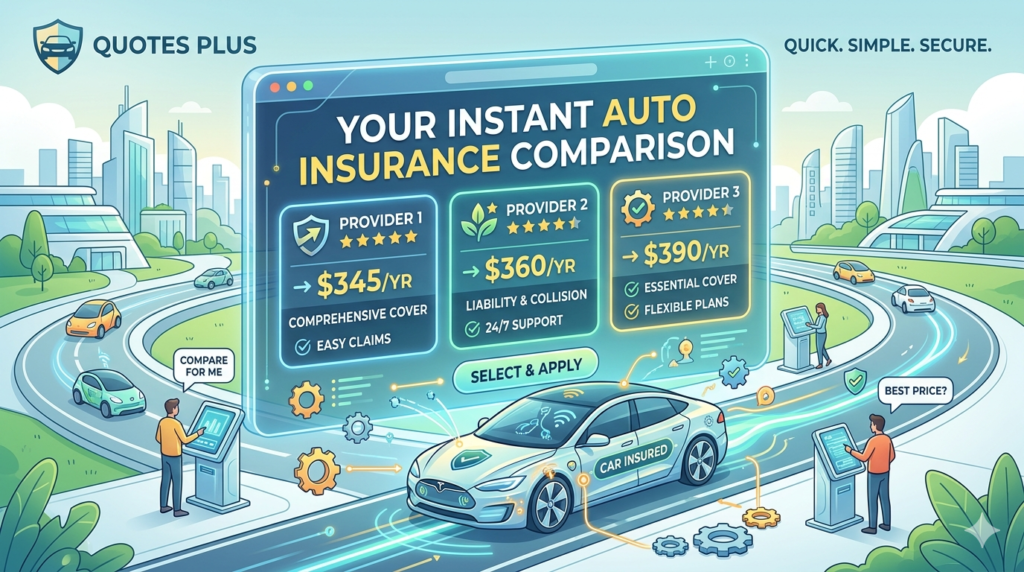
Auto insurance premiums have continued their steep upward trajectory in 2026, leaving countless drivers experiencing “sticker shock” when their annual renewal notices arrive in the mail. A perfect storm of higher vehicle repair costs, expensive advanced safety technology (ADAS), and increasingly strict actuarial risk models has made affordable coverage significantly harder to find.
As a result, learning how to effectively compare auto insurance quotes online is no longer just a good idea—it is one of the smartest, highest-ROI financial habits for the modern driver.
Many consumers fall into the trap of assuming that staying loyal to one insurance carrier guarantees them the best pricing. In reality, the insurance industry operates on a model that frequently penalizes loyalty. Insurance companies often reserve their most competitive rates, steepest discounts, and best promotional offers strictly for new customers to capture market share.
This comprehensive guide breaks down exactly how to compare auto insurance quotes online the right way. We will explore how to decode complex policy jargon, avoid costly coverage gaps, and secure reliable protection without overpaying.
Table of Contents
Why You Must Compare Auto Insurance Quotes Every Single Year
Insurance pricing is highly dynamic, relying on algorithms that update constantly. Rates fluctuate based on macro-market trends, regional claim data, inflation, and hyper-local factors down to your specific ZIP code. Because every insurer weights these risk factors differently, two drivers with identical profiles living next door to each other may receive vastly different auto insurance quotes from different providers.
Making it a habit to compare quotes annually empowers you to:
- Discover the True Market Rate: Ensure you aren’t paying above the industry average for your specific driver profile.
- Avoid the “Loyalty Tax”: Escape incremental rate hikes that insurers often slip into the renewals of long-term policyholders.
- Unlock Life-Event Discounts: Adjust your pricing favorably if your life circumstances have changed (e.g., getting married, buying a house, or turning 25).
- Adapt to Vehicle Depreciation: As your car ages, you may no longer need the same expensive coverage limits you did when it was brand new.
Even dedicating just 30 minutes to a thorough comparison process can yield hundreds of dollars in annual savings.
Step 1: The Pre-Comparison Checklist (Gather Your Data)
Accuracy is the foundation of a successful quote comparison. Inconsistent or estimated details will result in misleading “teaser” rates that drastically change once the underwriter verifies your history. To ensure apples-to-apples comparisons, gather the following documents before you begin:
- Exact Vehicle Details: Have your Vehicle Identification Number (VIN) ready. At minimum, know the exact year, make, model, and current odometer mileage.
- Driver Information: Driver’s license numbers for all household members, plus precise dates of any accidents, moving violations, or claims within the last 3–5 years.
- Current Policy Declarations Page: This is your cheat sheet. It lists your exact current coverages, limits, and deductibles so you know what benchmark you are trying to beat.
- Usage Metrics: Know your estimated annual mileage and your primary vehicle use (e.g., daily commuting vs. pleasure driving).
Step 2: The 3 Methods for Comparing Quotes Online
There are several avenues for sourcing car insurance rates, and utilizing a combination of them yields the best results.
1. Online Comparison Aggregators
These platforms allow you to input your information once and instantly view multiple auto insurance quotes side-by-side.
- Pros: Incredibly fast; great for establishing a baseline market average.
- Cons: Not all major insurers participate in aggregators, and the initial quotes are often estimates pending background checks.
2. Direct-to-Consumer Carrier Websites
Requesting quotes directly through a specific insurer’s portal (like Geico, Progressive, or State Farm) often produces the most accurate, binding pricing.
- Pros: Highly accurate; unlocks proprietary, carrier-specific discounts not shown on third-party sites.
- Cons: Time-consuming, as you must repeatedly enter your personal data across multiple websites.
3. Independent Insurance Brokers
While not strictly “online,” many digital-first independent brokers operate through online portals. They shop your profile across dozens of carriers they represent.
- Pros: Expert guidance on complex coverage needs; they do the heavy lifting for you.
- Cons: They only quote the specific network of insurers they are contracted with.
Step 3: Deciphering the Jargon (Compare Coverage, Not Just Price)
A lower monthly premium is completely useless if it leaves you financially exposed after a severe accident. When reviewing auto insurance quotes, you must ensure the coverage limits match identically.
Here is a breakdown of what you are actually buying:
| Coverage Type | What It Protects | Expert Recommendation |
| Bodily Injury Liability | Pays for the medical expenses of others if you cause an accident. | Never settle for state minimums. Aim for at least $100k per person / $300k per accident to protect your personal assets from lawsuits. |
| Property Damage Liability | Pays to repair the other driver’s vehicle or property you damage. | Aim for at least $50k to $100k. (A minor fender bender with a modern luxury EV can easily exceed $30,000 in damages). |
| Collision Coverage | Pays to repair your vehicle after an accident, regardless of fault. | Drop this if the annual cost of the coverage exceeds 10% of your older vehicle’s total cash value. |
| Comprehensive Coverage | Protects your car against non-collision events: theft, vandalism, hail, fire, or hitting an animal. | Highly recommended unless you drive a very low-value “beater” car. |
| Uninsured Motorist (UM) | Covers your medical bills if you are hit by a driver with no insurance. | Essential. Millions of drivers on the road are illegally uninsured. |
The Deductible Lever: Your deductible is the amount you pay out-of-pocket before insurance kicks in. Choosing a higher deductible (e.g., $1,000 instead of $500) will significantly reduce your monthly premium.
Step 4: The Hidden Algorithm—What Actually Affects Your Premium?
Insurance companies utilize highly guarded algorithms to assess your risk. While they differ by carrier, almost all auto insurance quotes are heavily influenced by the following metrics:
- Driving Record & Claims History: The most heavily weighted factor. A recent at-fault accident or DUI will trigger massive rate spikes.
- Credit-Based Insurance Score: In most states, insurers use your credit history to predict the likelihood of you filing a claim. Excellent credit equals lower rates.
- Vehicle Safety & Repair Costs: A $40,000 car with standard parts is cheaper to insure than a $40,000 EV requiring specialized lithium-ion battery repairs and calibrated sensors.
- ZIP Code: Urban areas with high traffic density, frequent accidents, and higher rates of vehicle theft will carry higher premiums than rural areas.
Step 5: Advanced Strategies to Stack Discounts
Before accepting a final quote, aggressive discount hunting can trim another 10% to 25% off your premium. Ensure you are checking the boxes for:
- Multi-Policy Bundling: Combining your auto insurance with your home or renters insurance is almost always the single largest discount available.
- Telematics & Usage-Based Insurance (UBI): Opting into programs that track your driving habits via a smartphone app (monitoring hard braking, speeding, and late-night driving) can yield up to a 30% discount for safe drivers.
- Good Student Discounts: For young drivers under 25, maintaining a “B” average or higher significantly offsets the high-risk youth penalty.
- Administrative Discounts: Setting up auto-pay, choosing paperless billing, or paying the 6-month premium in full upfront always knocks a few dollars off the top.
Step 6: 3 Critical Mistakes to Avoid When Shopping Online
- Ignoring Customer Service Ratings: A cheap policy is a nightmare if the insurer fights you for months to pay out a legitimate claim. Always check J.D. Power claims satisfaction scores before buying.
- Lying About Mileage or Usage: Misrepresenting how far you commute to get a lower rate is considered “soft fraud.” If discovered during a claim investigation, the insurer can legally deny your payout.
- Canceling Your Old Policy Too Soon: Never cancel your current insurance until you have received the official binder and ID cards for your new policy. A lapse in coverage of even one day will classify you as a “high-risk” driver, instantly raising your future rates.
Step 7: Vetting the Insurer’s Financial Health
The final step before inputting your credit card details is verifying the carrier’s stability. An insurance policy is only a promise to pay; you need to ensure the company has the liquid cash to honor that promise after a widespread disaster (like a hurricane or massive hail storm).
Look up the company on AM Best (the standard rating agency for the insurance industry). You want an insurer graded “A” (Excellent) or “A+” (Superior).
Frequently Asked Questions (FAQ)
Does comparing auto insurance quotes online lower my credit score?
No. When an auto insurance company checks your credit to generate a quote, it is classified as a “soft pull” or soft inquiry. This does not affect your credit score whatsoever, no matter how many quotes you request.
Why did my final online quote change from the initial estimate?
Initial quotes are based purely on the honor system using the data you type in. The final, binding price is calculated only after the insurer runs your official Motor Vehicle Report (MVR) and C.L.U.E. report (Comprehensive Loss Underwriting Exchange) to verify your actual driving and claims history.
Should I drop full coverage on an older car to save money?
The general industry rule of thumb is the “10% Rule.” If your annual premium for comprehensive and collision coverage is more than 10% of your vehicle’s actual cash value (ACV), it is likely time to drop it and stick to liability only.
Conclusion
Comparing auto insurance quotes online is the most effective defense against the rising costs of driving in 2026. By understanding exactly what coverage limits you need, optimizing your risk factors, and strategically applying hidden discounts, you can secure robust financial protection without draining your wallet.
Remember, the goal is not simply to find the absolute cheapest policy on the market. The ultimate goal is to find the policy that perfectly balances aggressive pricing with comprehensive coverage and a rock-solid reputation for paying claims when you need them most.
Pingback: How to Compare Car Insurance Quotes Effectively in 2026
Pingback: Commercial Vehicle Insurance Best Explained: Coverage, Costs, and Tips for 2026
Pingback: Business Insurance Coverage Best Explained: What Every Business Needs in 2026
Pingback: Professional Liability Insurance Best Explained: Who Needs It in 2026
Pingback: Health Insurance Plans Explained: How to Choose the Right Best Coverage in 2026
Pingback: Pet Insurance Quotes Best Explained: How to Compare and Save in 2026
Pingback: Home Insurance Quotes Best Explained: How to Compare and Save in 2026
Pingback: Travel Insurance Online Best Explained: What to Know Before You Buy in 2026
Pingback: Life Insurance Policy Best Explained: Term vs Whole Life in 2026
Pingback: Auto Insurance Quotes vs Car Insurance Quotes: What’s the Big Difference in 2026?
Pingback: Health Insurance Plans vs Health Savings Accounts (HSA): What’s Better in 2026?
Pingback: Family Health Insurance Complete Guide 2026: Coverage, Costs & Benefits
Pingback: How to Choose a Health Insurance Plan in 2026: Complete Beginner's Guide
Pingback: Best Life Insurance for Young Families in 2026: Complete Buying Guide
Pingback: How Much Life Insurance Do You Need in 2026? Complete Coverage Guide
Pingback: Life Insurance Riders Explained: Complete Guide to Optional Coverage in 2026
Pingback: Home Insurance Coverage Explained: Complete Homeowners Guide for 2026
Pingback: Home Insurance Claims Process Guide: Step-by-Step Guide for Homeowners in 2026
Pingback: What Does Home Insurance Cover? Complete Homeowners Insurance Guide for 2026
Pingback: Home Insurance Deductibles Explained: Complete Homeowners Guide for 2026
Pingback: How Much Home Insurance Do You Need in 2026? Complete Coverage Guide
Pingback: Small Business Insurance Checklist: Essential Coverage Guide for 2026
Pingback: General Liability vs Professional Liability Insurance: Key Differences Explained for 2026