Owning a home is one of the largest financial investments most people will ever make. Protecting that investment is essential, which is why homeowners insurance plays such an important role. However, many homeowners purchase policies without fully understanding what is included and what is excluded.
This guide provides home insurance coverage explained in simple terms, helping homeowners understand how insurance works, what it protects, and how to choose the right policy. Whether you are a first-time homeowner or reviewing an existing policy, understanding home insurance coverage can help you avoid costly surprises.
Home Insurance Coverage Explained: What Is Home Insurance?
Home insurance is a policy designed to provide financial protection against damage to your home, personal belongings, and certain liability risks.
A standard homeowners insurance policy generally helps cover losses resulting from:
- Fire and smoke damage
- Windstorms
- Hail damage
- Theft
- Vandalism
- Certain water-related incidents
- Personal liability claims
The purpose of home insurance is to reduce the financial burden caused by unexpected events.
Home Insurance Coverage Explained: Why Homeowners Need Insurance
Most homeowners cannot afford to rebuild a house or replace personal belongings after a major disaster.
Home insurance provides:
- Financial protection
- Liability coverage
- Property replacement assistance
- Peace of mind
- Mortgage lender compliance
Many mortgage lenders require homeowners insurance before approving a home loan.
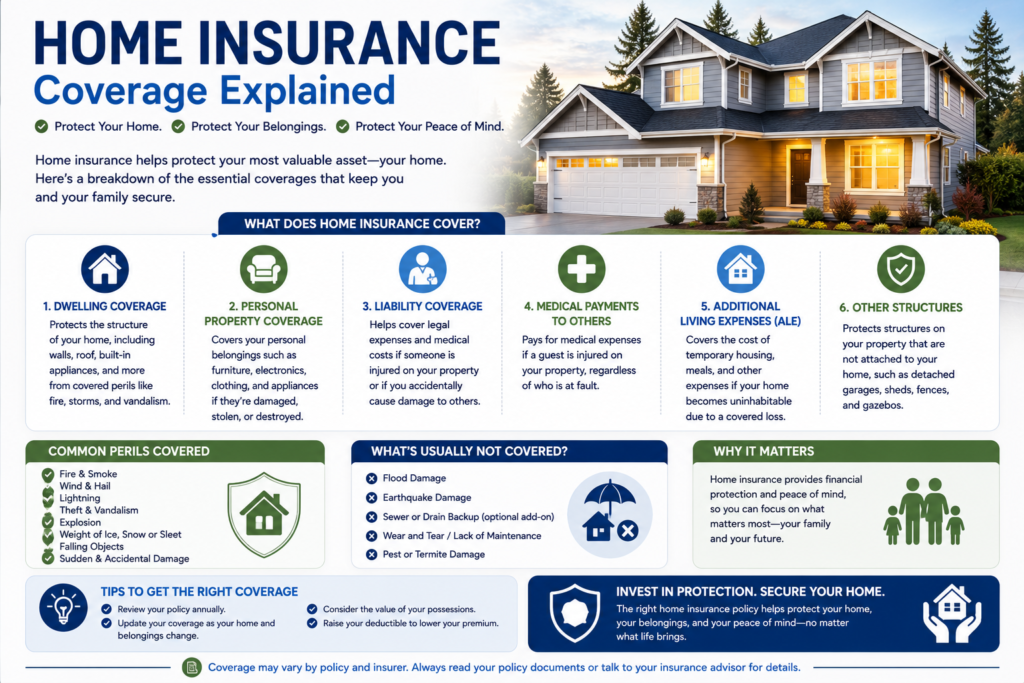
Home Insurance Coverage Explained: Dwelling Coverage
Dwelling coverage is the core component of a homeowners insurance policy.
This portion of the policy helps pay for repairs or rebuilding costs if the structure of the home is damaged by a covered event.
What Dwelling Coverage Typically Protects
- Roof
- Walls
- Foundation
- Floors
- Built-in appliances
- Attached garages
For most homeowners, dwelling coverage represents the largest portion of their insurance policy.
Home Insurance Coverage Explained: Personal Property Coverage
Personal property coverage protects belongings inside the home.
Examples include:
- Furniture
- Electronics
- Clothing
- Appliances
- Home office equipment
If covered items are stolen or damaged by a covered peril, insurance may help pay for replacement or repair costs.
High-Value Item Considerations
Some items may have coverage limits, including:
- Jewelry
- Artwork
- Collectibles
- Luxury watches
Additional endorsements may be required for expensive belongings.
Home Insurance Coverage Explained: Liability Protection
Liability coverage protects homeowners if someone is injured on their property or if the homeowner accidentally causes damage to another person’s property.
Examples include:
- Slip-and-fall accidents
- Dog bite claims
- Property damage claims
Liability coverage may help pay for:
- Medical expenses
- Legal fees
- Court judgments
- Settlement costs
This protection can be extremely valuable in unexpected situations.
Home Insurance Coverage Explained: Additional Living Expenses Coverage
If a covered event makes your home temporarily uninhabitable, additional living expenses coverage may help pay for temporary housing costs.
Covered expenses may include:
- Hotel stays
- Restaurant meals
- Temporary rentals
- Transportation expenses
This coverage helps families maintain their normal standard of living during repairs.
Home Insurance Coverage Explained: Common Covered Perils
Insurance policies typically protect against specific risks known as perils.
Common covered perils include:
Fire and Smoke
One of the most important protections provided by homeowners insurance.
Windstorms
Coverage may include damage caused by severe storms and strong winds.
Hail
Many policies provide protection against hail-related property damage.
Theft
Stolen belongings may be covered under personal property protection.
Vandalism
Intentional property damage is often covered.
Lightning
Lightning strikes can cause structural damage and electrical system failures.
Home Insurance Coverage Explained: What Is Usually Not Covered?
One of the most important aspects of home insurance coverage explained is understanding exclusions.
Standard policies often exclude:
Flood Damage
Flood insurance typically requires a separate policy.
Earthquakes
Earthquake protection usually requires additional coverage.
Normal Wear and Tear
Insurance does not cover maintenance-related deterioration.
Pest Damage
Damage caused by termites, rodents, or insects is generally excluded.
Intentional Damage
Deliberate property damage is not covered.
Understanding exclusions helps homeowners avoid misunderstandings during claims.
Home Insurance Coverage Explained: Home Insurance Policy Types
Different policy forms provide different levels of protection.
HO-1 Policy
Basic coverage with limited protection.
HO-2 Policy
Broader coverage than HO-1.
HO-3 Policy
The most common homeowners insurance policy.
Provides broad protection for homes and belongings.
HO-5 Policy
Comprehensive coverage with fewer exclusions.
HO-6 Policy
Designed for condominium owners.
Selecting the correct policy type is an important part of understanding home insurance coverage explained.
Home Insurance Coverage Explained: Factors Affecting Insurance Costs
Insurance premiums vary based on several factors.
Location
Homes located in disaster-prone areas often have higher premiums.
Home Value
More expensive homes typically cost more to insure.
Construction Materials
Building materials can influence risk levels.
Claims History
Previous claims may impact premiums.
Coverage Limits
Higher coverage amounts generally increase costs.
Deductible Amount
Higher deductibles usually reduce monthly premiums.
Home Insurance Coverage Explained: How Much Coverage Do You Need?
Determining coverage needs requires evaluating several factors.
Consider:
- Rebuilding costs
- Personal property value
- Liability risks
- Local construction costs
- Mortgage requirements
Many homeowners underestimate rebuilding costs, which can lead to insufficient coverage.
Home Insurance Coverage Explained: Tips for Choosing a Policy
Compare Multiple Quotes
Shopping around often reveals significant pricing differences.
Review Coverage Limits
Ensure limits are sufficient for your home’s value.
Understand Deductibles
Choose a deductible that fits your financial situation.
Check Exclusions
Always review policy exclusions carefully.
Consider Additional Endorsements
Specialized coverage may provide extra protection.
Home Insurance Coverage Explained: Comparison Table
| Coverage Type | What It Protects |
|---|---|
| Dwelling Coverage | Home structure |
| Personal Property Coverage | Belongings |
| Liability Coverage | Injury and damage claims |
| Additional Living Expenses | Temporary housing costs |
| Medical Payments Coverage | Minor guest injuries |
Common Mistakes Homeowners Make
Buying the Cheapest Policy
Low-cost policies may provide inadequate protection.
Underinsuring the Home
Coverage should reflect rebuilding costs, not market value.
Ignoring Exclusions
Many homeowners incorrectly assume all disasters are covered.
Forgetting Valuable Items
High-value possessions may require additional protection.
Failing to Review Policies
Insurance needs can change over time.
Frequently Asked Questions About Home Insurance Coverage Explained
What does home insurance usually cover?
Most policies cover the home structure, personal belongings, liability claims, and temporary living expenses.
Does home insurance cover floods?
Standard homeowners insurance generally does not cover flood damage.
How much home insurance coverage do I need?
Coverage should be based on rebuilding costs, personal property value, and liability needs.
Is homeowners insurance required by law?
Generally no, but mortgage lenders often require it.
Can I lower my homeowners insurance premium?
Increasing deductibles and improving home security may reduce costs.
Conclusion
Understanding home insurance coverage explained in simple terms can help homeowners make smarter insurance decisions. Homeowners insurance provides valuable protection for your property, belongings, and financial well-being when unexpected events occur.
By understanding what is covered, what is excluded, and how policies work, homeowners can select coverage that offers meaningful protection while avoiding costly gaps in coverage. Reviewing your policy regularly ensures that your home remains adequately protected in 2026 and beyond. Insurance Information Institute