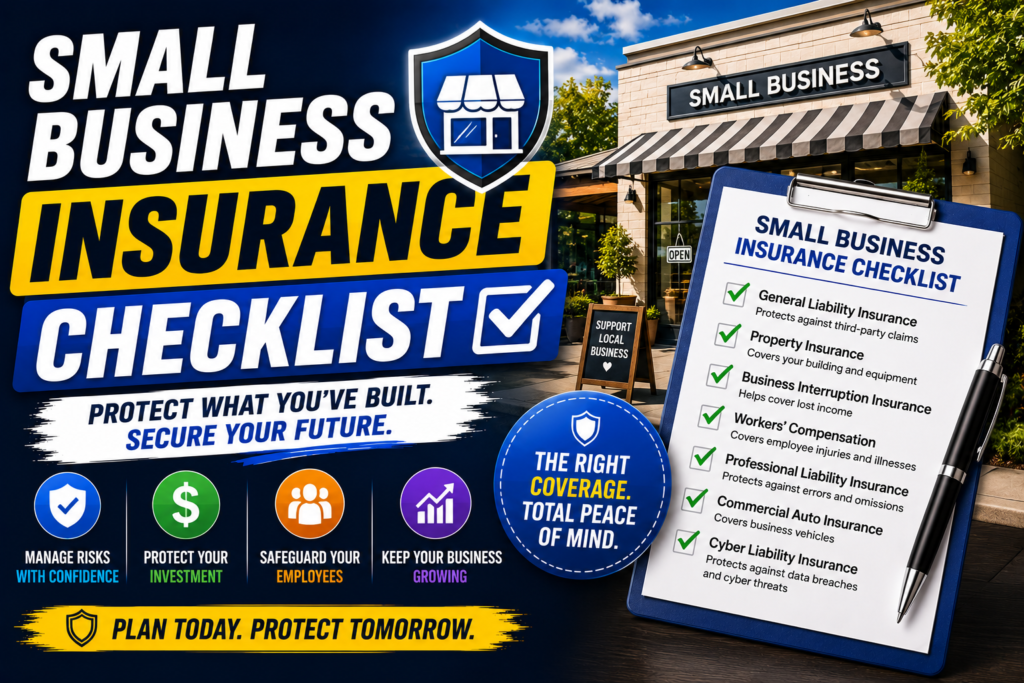
Running a small business involves managing risks every day. From property damage and customer injuries to cyberattacks and employee-related incidents, unexpected events can create significant financial challenges. This is why having the right insurance coverage is essential for protecting your business and ensuring long-term success.
A small business insurance checklist helps business owners identify potential risks and determine which insurance policies may be necessary. Rather than purchasing coverage blindly, business owners can use a structured approach to evaluate their needs and build an effective protection strategy.
This small business insurance checklist explains the most important insurance policies available to businesses, factors that influence coverage requirements, and how to choose the right protection in 2026.
Why a Small Business Insurance Checklist Is Important
Many business owners assume that insurance is only necessary for large corporations. However, small businesses often face similar risks and may be even more vulnerable to financial losses.
A small business insurance checklist helps companies:
- Identify potential risks
- Avoid coverage gaps
- Protect business assets
- Meet legal requirements
- Improve financial stability
- Build customer confidence
Proper insurance planning can help businesses recover more quickly after unexpected events.
Small Business Insurance Checklist: General Liability Insurance
General liability insurance is one of the most important forms of business protection.
This coverage may help pay for:
- Customer injuries
- Property damage claims
- Legal defense costs
- Advertising injury claims
Many landlords, clients, and vendors require proof of general liability insurance before doing business.
Who Needs General Liability Insurance?
- Retail stores
- Consultants
- Contractors
- Restaurants
- Service providers
- Office-based businesses
For many companies, this is the first item on any small business insurance checklist.
Small Business Insurance Checklist: Commercial Property Insurance
Commercial property insurance protects physical business assets.
Covered property may include:
- Buildings
- Equipment
- Inventory
- Furniture
- Computers
- Office supplies
Property coverage helps businesses recover from losses caused by covered events such as fire, theft, and vandalism.
Why Property Coverage Matters
Replacing damaged assets can be extremely expensive.
Commercial property insurance helps reduce financial disruption after unexpected losses.
Small Business Insurance Checklist: Workers’ Compensation Insurance
Workers’ compensation insurance provides benefits to employees injured while performing job-related duties.
Coverage may include:
- Medical expenses
- Rehabilitation costs
- Lost wages
- Disability benefits
In many jurisdictions, workers’ compensation insurance is legally required once a business hires employees.
Small Business Insurance Checklist: Professional Liability Insurance
Professional liability insurance protects businesses that provide professional advice or services.
Coverage may help pay for claims involving:
- Negligence
- Errors
- Omissions
- Professional mistakes
Businesses that frequently purchase this coverage include:
- Consultants
- Accountants
- Designers
- Marketing agencies
- Technology firms
Professional liability insurance is often a critical component of a small business insurance checklist.
Small Business Insurance Checklist: Business Interruption Insurance
Business interruption insurance helps replace lost income when operations are temporarily suspended because of a covered event.
Covered expenses may include:
- Lost revenue
- Rent payments
- Payroll expenses
- Loan obligations
Business interruption coverage can help companies survive unexpected closures.
Small Business Insurance Checklist: Cyber Liability Insurance
Cyber risks continue to increase for businesses of all sizes.
Cyber liability insurance may provide protection against:
- Data breaches
- Ransomware attacks
- Hacking incidents
- Privacy violations
Coverage may include:
- Legal costs
- Notification expenses
- Data recovery costs
- Public relations support
Many modern businesses include cyber coverage in their small business insurance checklist.
Small Business Insurance Checklist: Commercial Auto Insurance
Businesses that own or operate vehicles may require commercial auto insurance.
Coverage may protect against:
- Vehicle accidents
- Property damage
- Bodily injury claims
- Vehicle theft
Personal auto policies generally do not provide adequate protection for business use.
Small Business Insurance Checklist: Product Liability Insurance
Businesses that manufacture, distribute, or sell products may face liability risks if products cause harm.
Product liability insurance may help cover:
- Injury claims
- Property damage claims
- Legal defense expenses
This coverage is particularly important for retailers and manufacturers.
Small Business Insurance Checklist: Employment Practices Liability Insurance
Employment-related claims can be costly.
Employment practices liability insurance may provide protection against allegations involving:
- Discrimination
- Harassment
- Wrongful termination
- Retaliation claims
Growing businesses often consider this coverage as employee counts increase.
Small Business Insurance Checklist: Business Owner’s Policy (BOP)
A Business Owner’s Policy combines multiple coverages into a single package.
A typical BOP may include:
- General liability insurance
- Commercial property insurance
- Business interruption insurance
Benefits include:
- Simplified management
- Cost savings
- Comprehensive protection
Many small businesses find BOP coverage highly attractive.
Small Business Insurance Checklist: Industry-Specific Considerations
Insurance needs vary by industry.
Retail Businesses
Common needs:
- General liability
- Property insurance
- Product liability
Professional Services
Common needs:
- Professional liability
- Cyber insurance
- General liability
Construction Companies
Common needs:
- Workers’ compensation
- Commercial auto
- General liability
E-commerce Businesses
Common needs:
- Cyber liability
- Product liability
- Business interruption insurance
Small Business Insurance Checklist: Coverage Comparison Table
| Coverage Type | Main Purpose |
|---|---|
| General Liability | Third-party claims |
| Commercial Property | Physical assets |
| Workers’ Compensation | Employee injuries |
| Professional Liability | Service-related claims |
| Business Interruption | Lost income |
| Cyber Liability | Data breach protection |
| Commercial Auto | Business vehicles |
| Product Liability | Product-related claims |
Common Insurance Mistakes Businesses Make
Buying the Cheapest Policy
Low-cost coverage may leave important risks unprotected.
Ignoring Cyber Risks
Cyber incidents affect businesses of all sizes.
Underinsuring Property
Inadequate coverage can create financial hardship.
Failing to Review Policies
Business needs often change over time.
Assuming One Policy Covers Everything
Most businesses require multiple forms of protection.
Frequently Asked Questions About Small Business Insurance Checklist
What insurance does every small business need?
General liability insurance is often considered essential for most businesses.
Is workers’ compensation insurance required?
Requirements vary by location, but many jurisdictions require coverage once employees are hired.
What is a Business Owner’s Policy?
A BOP combines several common business insurance coverages into one package.
Do small businesses need cyber insurance?
Many businesses benefit from cyber coverage because of increasing digital risks.
How often should businesses review insurance coverage?
Most experts recommend reviewing policies annually.
Conclusion
A comprehensive small business insurance checklist helps business owners identify potential risks and build appropriate protection strategies. From liability claims and property damage to cyber incidents and employee injuries, insurance plays a critical role in protecting business operations.
By evaluating business risks, understanding available coverage options, and reviewing policies regularly, companies can create a stronger foundation for long-term success and financial stability in 2026 and beyond. U.S. Small Business Administration
Explore More Insurance Guides
- Compare Auto Insurance Quotes
- Commercial Vehicle Insurance
- Family Health Insurance Complete Guide
- Health Insurance Deductibles and Copays Explained
- PPO vs HMO Health Plans
- How Much Life Insurance Do You Need
- Home Insurance Claims Process Guide
- Home Insurance Deductibles Explained
- How Much Home Insurance Do You Need
- Business Insurance Coverage Explained
- General Liability vs Professional Liability Insurance