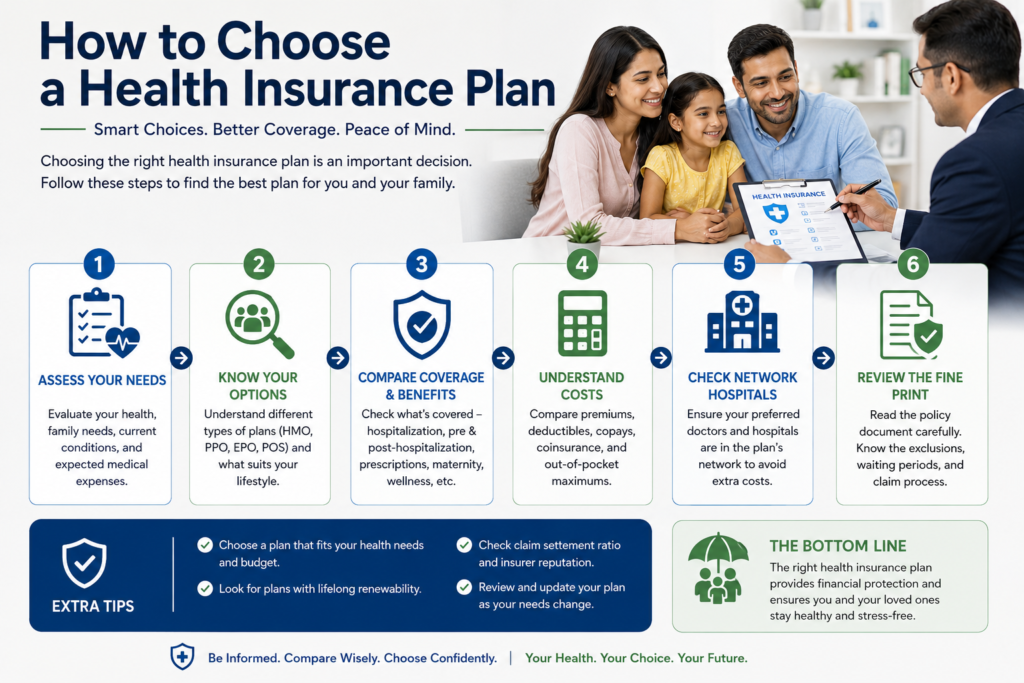
Choosing health insurance can feel overwhelming, especially when there are dozens of plans with different costs, coverage options, deductibles, and provider networks. Many people simply choose the cheapest plan available, only to discover later that it doesn’t meet their healthcare needs.
Learning how to choose a health insurance plan is one of the most important financial decisions you can make. The right plan can protect your health, reduce medical expenses, and provide peace of mind when unexpected healthcare needs arise.
This guide explains how to choose a health insurance plan step by step, helping individuals and families make confident healthcare decisions in 2026.
Why Learning How to Choose a Health Insurance Plan Matters
Healthcare costs continue to increase every year. Without proper insurance coverage, even routine medical services can become expensive.
Understanding how to choose a health insurance plan helps you:
- Reduce healthcare expenses
- Access quality medical providers
- Avoid unexpected medical bills
- Protect your family’s financial future
- Receive preventive healthcare services
Choosing the right plan today can save thousands of dollars over time.
How to Choose a Health Insurance Plan Based on Your Healthcare Needs
The first step in learning how to choose a health insurance plan is understanding your healthcare needs.
Ask yourself:
- How often do you visit doctors?
- Do you take prescription medications?
- Do you have chronic health conditions?
- Do family members require specialist care?
- Are you planning a pregnancy?
Your answers will help determine the level of coverage you need.
Low Healthcare Usage
Individuals who rarely visit doctors may benefit from lower-cost plans with higher deductibles.
Moderate Healthcare Usage
People who require occasional medical care often benefit from balanced coverage and moderate deductibles.
High Healthcare Usage
Families with ongoing healthcare needs may benefit from lower deductibles and broader provider networks.
How to Choose a Health Insurance Plan by Comparing Monthly Premiums
Monthly premiums are the amount you pay every month to maintain insurance coverage.
While lower premiums may seem attractive, they do not always result in lower overall healthcare costs.
Lower Premium Plans
Benefits:
- Reduced monthly expenses
- Good for healthy individuals
Potential drawbacks:
- Higher deductibles
- Greater out-of-pocket costs
Higher Premium Plans
Benefits:
- Lower deductibles
- More predictable healthcare expenses
Potential drawbacks:
- Higher monthly payments
How to Choose a Health Insurance Plan by Understanding Deductibles
A deductible is the amount you pay before insurance begins covering eligible healthcare expenses.
For example:
- Deductible: $2,000
- Medical expenses: $2,000
- Insurance contribution before deductible: $0
After reaching the deductible, the insurance company begins sharing costs according to policy terms.
Low Deductible Plans
Best for:
- Families
- Individuals with ongoing healthcare needs
- Frequent healthcare users
High Deductible Plans
Best for:
- Healthy individuals
- People seeking lower premiums
- Those with emergency savings
How to Choose a Health Insurance Plan by Evaluating Copays
Copays are fixed fees paid when receiving healthcare services.
Examples include:
| Service | Typical Copay |
|---|---|
| Primary Care Visit | $20-$40 |
| Specialist Visit | $40-$80 |
| Urgent Care | $50-$100 |
| Prescription Medication | $10-$30 |
When learning how to choose a health insurance plan, comparing copays can help estimate annual healthcare expenses.
How to Choose a Health Insurance Plan by Comparing Provider Networks
Provider networks determine which doctors and hospitals participate in the insurance plan.
HMO Networks
Advantages:
- Lower costs
- Coordinated care
Disadvantages:
- Limited provider choices
- Referral requirements
PPO Networks
Advantages:
- Larger provider networks
- Greater flexibility
Disadvantages:
- Higher costs
Understanding provider networks is essential when deciding how to choose a health insurance plan.
How to Choose a Health Insurance Plan for Families
Families often have unique healthcare requirements.
When considering how to choose a health insurance plan for families, evaluate:
- Children’s healthcare needs
- Vaccination coverage
- Pediatric specialists
- Family deductibles
- Prescription coverage
Family plans should provide comprehensive protection while remaining affordable.
How to Choose a Health Insurance Plan Based on Prescription Coverage
Prescription drug coverage can significantly impact healthcare expenses.
Before selecting a plan:
- Review medication lists
- Verify formulary coverage
- Compare pharmacy networks
- Check prescription copays
People taking long-term medications should pay particular attention to prescription benefits.
How to Choose a Health Insurance Plan by Reviewing Out-of-Pocket Maximums
An out-of-pocket maximum limits the amount you pay during a policy year.
After reaching this limit, insurance generally covers 100% of eligible healthcare expenses.
This feature provides important financial protection against major medical events.
Health Insurance Plan Comparison Table
| Feature | HMO | PPO |
| Monthly Premium | Lower | Higher |
| Deductible | Lower | Higher |
| Provider Flexibility | Limited | High |
| Specialist Referrals | Required | Not Required |
| Out-of-Network Coverage | Limited | Available |
| Best For | Budget-conscious families | Flexible healthcare access |
Common Mistakes When Learning How to Choose a Health Insurance Plan
Choosing Based Only on Premiums
Low premiums can result in higher healthcare costs later.
Ignoring Provider Networks
Always confirm preferred doctors participate in the network.
Forgetting Prescription Costs
Medication expenses can add up quickly.
Overlooking Family Healthcare Needs
Family plans should accommodate all covered members.
Not Comparing Multiple Plans
Comparing multiple options often reveals better value.
Expert Tips on How to Choose a Health Insurance Plan
Consider Total Annual Costs
Evaluate:
- Premiums
- Deductibles
- Copays
- Coinsurance
- Out-of-pocket maximums
Review Preventive Care Benefits
Preventive healthcare can improve long-term health outcomes.
Understand Referral Requirements
Referral rules can affect specialist access.
Read Plan Documents Carefully
Policy details often contain important coverage limitations.
Frequently Asked Questions About How to Choose a Health Insurance Plan
How do I know which health insurance plan is best?
The best plan depends on your healthcare needs, budget, and preferred providers.
Should I choose a low deductible plan?
Low deductible plans are often beneficial for people who expect frequent healthcare usage.
Are PPO plans better than HMO plans?
Neither is universally better. The right choice depends on your healthcare preferences.
What is the most important factor when choosing health insurance?
Many experts recommend evaluating total annual healthcare costs rather than focusing solely on premiums.
Can I change health insurance plans later?
Most individuals can switch plans during open enrollment or qualifying life events.
Conclusion
Learning how to choose a health insurance plan is essential for protecting your health and finances. By comparing premiums, deductibles, copays, provider networks, and prescription benefits, consumers can make informed decisions that align with their healthcare needs.
Understanding how to choose a health insurance plan today can help you avoid costly mistakes and ensure access to quality medical care throughout 2026 and beyond.
Pingback: Family Health Insurance Complete Guide 2026: Coverage, Costs & Benefits