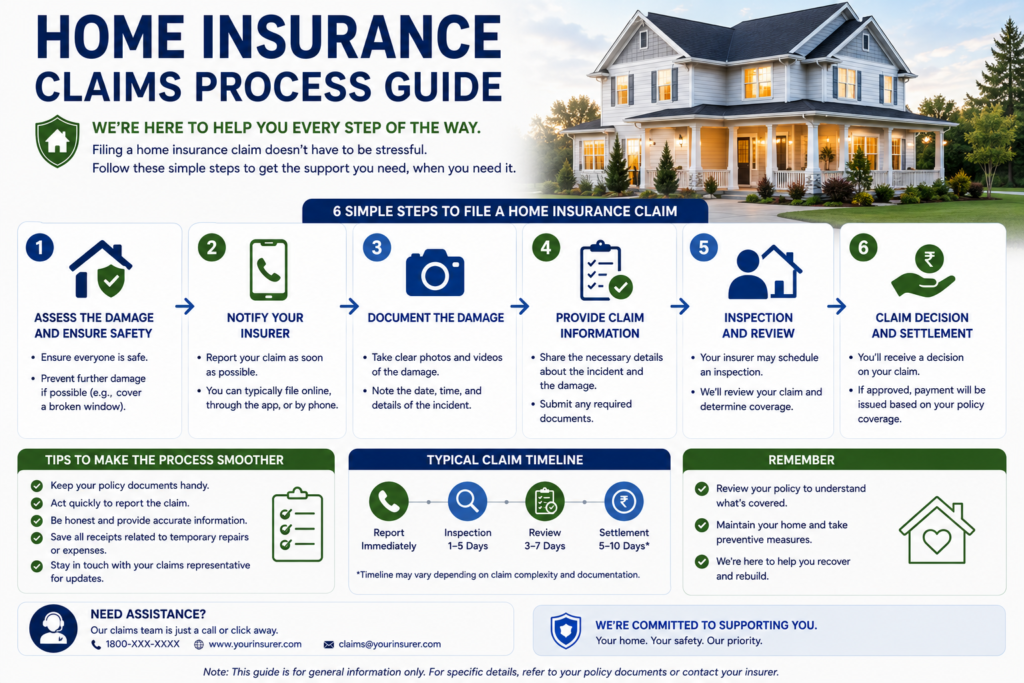
Experiencing damage to your home can be stressful and overwhelming. Whether the damage results from a storm, fire, theft, or another covered event, understanding the home insurance claims process can help you recover more quickly and avoid costly mistakes.
Many homeowners are unfamiliar with the claims process until they need it. Unfortunately, mistakes made during a claim can lead to delays, reduced payouts, or even claim denials. Understanding the home insurance claims process guide before an emergency occurs can help ensure a smoother experience.
This comprehensive home insurance claims process guide explains every step involved in filing a claim, working with insurance adjusters, documenting losses, and receiving compensation.
Home Insurance Claims Process Guide: What Is a Home Insurance Claim?
A home insurance claim is a formal request submitted to an insurance company for compensation after a covered loss.
Homeowners may file claims for situations such as:
- Fire damage
- Storm damage
- Wind damage
- Theft
- Vandalism
- Water damage from covered causes
- Liability incidents
The purpose of a claim is to receive financial assistance for covered repairs, replacements, or legal expenses.
Home Insurance Claims Process Guide: When Should You File a Claim?
Not every incident requires a claim.
Before filing, homeowners should consider:
- Estimated repair costs
- Deductible amounts
- Potential premium increases
- Coverage limitations
If repair costs are only slightly higher than the deductible, paying out of pocket may sometimes be the better option.
However, significant losses should generally be reported promptly.
Home Insurance Claims Process Guide: Step 1 – Ensure Safety First
The first priority after any incident is safety.
Homeowners should:
- Evacuate dangerous areas
- Contact emergency services if necessary
- Prevent additional injuries
- Secure the property
Examples include:
- Turning off utilities after major damage
- Covering broken windows
- Preventing further water intrusion
Safety should always come before insurance concerns.
Home Insurance Claims Process Guide: Step 2 – Document the Damage
Proper documentation is one of the most important steps in the claims process.
Homeowners should:
Take Photos
Photograph all visible damage from multiple angles.
Record Videos
Video evidence can provide additional context.
Create an Inventory
List damaged or stolen items, including:
- Description
- Estimated value
- Purchase date
- Receipts if available
Thorough documentation strengthens a claim and reduces disputes.
Home Insurance Claims Process Guide: Step 3 – Contact Your Insurance Company
Notify your insurance company as soon as possible.
Many insurers offer:
- Mobile apps
- Online claim portals
- 24-hour claims hotlines
Provide basic details including:
- Policy number
- Date of loss
- Description of damage
- Emergency repairs performed
Prompt reporting helps accelerate the claims process.
Home Insurance Claims Process Guide: Step 4 – Understand Your Coverage
Before proceeding, review your policy carefully.
Key areas to examine include:
Deductibles
The amount you must pay before insurance contributes.
Coverage Limits
Maximum payout amounts for covered losses.
Exclusions
Events that are not covered under the policy.
Understanding your policy helps set realistic expectations.
Home Insurance Claims Process Guide: Step 5 – Prevent Further Damage
Most insurance policies require homeowners to take reasonable steps to prevent additional losses.
Examples include:
- Tarping damaged roofs
- Boarding broken windows
- Removing standing water
- Securing entrances
Keep receipts for emergency repairs because reimbursement may be available.
Home Insurance Claims Process Guide: Step 6 – Meet the Insurance Adjuster
After filing a claim, the insurance company typically assigns an adjuster.
The adjuster’s responsibilities include:
- Inspecting damage
- Reviewing evidence
- Estimating repair costs
- Determining coverage eligibility
During the inspection:
- Provide documentation
- Answer questions honestly
- Point out all damaged areas
Thorough communication can help ensure an accurate assessment.
Home Insurance Claims Process Guide: Step 7 – Review the Settlement Offer
After the inspection, the insurance company usually provides a settlement offer.
Review the offer carefully.
Verify:
- Repair estimates
- Replacement costs
- Deductible calculations
- Coverage limitations
If you disagree with the assessment, additional documentation may support an appeal.
Home Insurance Claims Process Guide: Step 8 – Complete Repairs
Once the claim is approved, homeowners can begin repairs.
Options often include:
- Contractor-selected repairs
- Insurance-approved contractors
- Partial payments during repairs
Always obtain written estimates before starting major work.
Common Home Insurance Claim Types
Understanding common claim categories helps homeowners prepare for potential risks.
Fire Damage Claims
Often among the largest homeowners insurance claims.
Storm Damage Claims
Wind, hail, and severe weather frequently result in claims.
Water Damage Claims
Coverage depends on the cause of the damage.
Theft Claims
Personal property losses may be reimbursed according to policy limits.
Liability Claims
Injury-related incidents may trigger liability protection.
Home Insurance Claims Process Guide: Reasons Claims Are Denied
Not all claims are approved.
Common reasons include:
Policy Exclusions
Certain events may not be covered.
Lack of Documentation
Insufficient evidence can weaken a claim.
Delayed Reporting
Late notification may create complications.
Maintenance Issues
Insurance generally does not cover neglect or routine maintenance problems.
Misrepresentation
Providing inaccurate information can result in claim denial.
Tips for Maximizing a Home Insurance Claim
Maintain a Home Inventory
Keep records of valuable belongings.
Save Receipts
Proof of ownership can support reimbursement requests.
Understand Your Policy
Know your coverage limits before an emergency occurs.
Document Everything
Detailed records improve claim accuracy.
Communicate Promptly
Respond quickly to insurance company requests.
Home Insurance Claims Process Guide: Comparison Table
| Claim Step | Purpose |
|---|---|
| Document Damage | Establish evidence |
| Contact Insurer | Start claim process |
| Meet Adjuster | Damage evaluation |
| Review Settlement | Verify compensation |
| Complete Repairs | Restore property |
Frequently Asked Questions About Home Insurance Claims Process Guide
How long does a home insurance claim take?
Timeframes vary depending on the complexity of the claim and insurer procedures.
Will filing a claim increase premiums?
It may, depending on the claim type and claims history.
Can I choose my own contractor?
In many cases, yes.
What if I disagree with the adjuster’s estimate?
Additional evidence or independent assessments may support an appeal.
Should I file a claim for minor damage?
It depends on repair costs and deductible amounts.
Conclusion
Understanding the home insurance claims process guide can make a difficult situation much easier to manage. By documenting damage, reporting losses promptly, working effectively with adjusters, and understanding policy terms, homeowners can improve their chances of a successful claim outcome.
Preparing in advance and knowing how the claims process works helps ensure that your homeowners insurance provides the financial protection it was designed to deliver when you need it most. National Association of Insurance Commissioners (NAIC)